Colombia’s ports receive new port cybersecurity guidelines
A cyberattack halted Japan’s largest port in 2023. Colombia’s maritime authority, DIMAR, now recommends seven measures to protect the country’s ports.

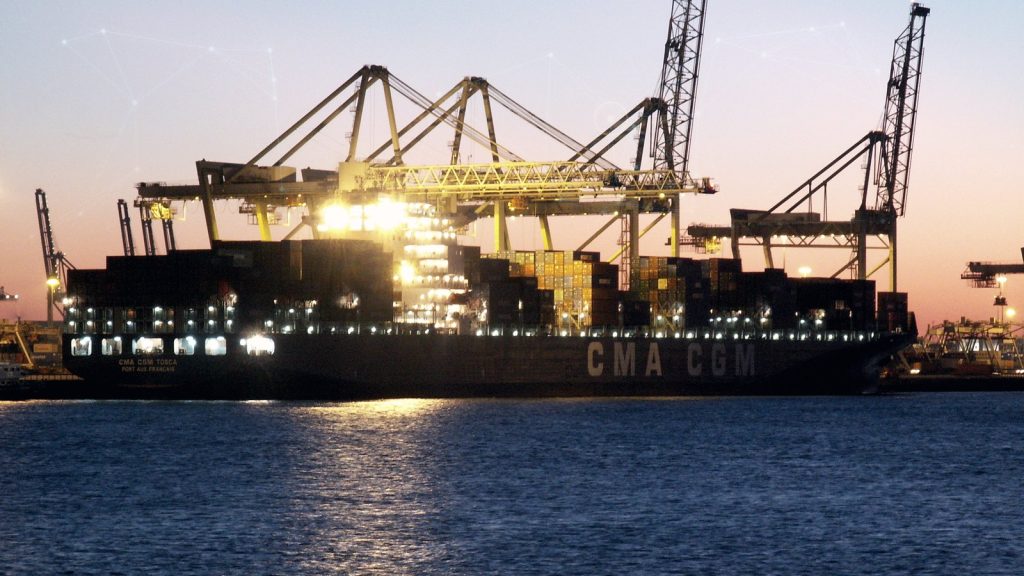
On July 4, 2023, staff at the port of Nagoya, Japan’s largest, could not start their computer systems. Instead, they received a message announcing a ransomware attack, and container operations were suspended.
Three years later, Colombia is starting to face that risk head-on. In July 2026, the Colombian Maritime Authority (DIMAR) sent the country’s port facilities a circular with guidelines on technology, artificial intelligence and cybersecurity.
I am Diego Rafael Patiño, a systems engineer, and in this article I explain what those guidelines ask for and why they matter for Colombia’s foreign trade. But first, it is worth clarifying what I mean when I talk about cybersecurity in ports.
What is port cybersecurity?
Port cybersecurity is the set of measures that protect a port’s digital systems, from cargo and billing platforms to cranes and access controls, against cyberattacks that can halt operations or expose sensitive information.
The concept covers two worlds that coexist every day in a terminal: the systems that handle information and the systems that move physical equipment. Later on, I explain why that difference matters so much.
First, it is worth looking at what happens when that protection fails. Two cases from 2023 show it clearly.
Two cyberattacks paralyzed major ports around the world in 2023
1. Nagoya, Japan’s largest port
Nagoya handles about 10% of Japan’s trade and is also the port through which Toyota imports and exports, according to The Maritime Executive. That is why the attack was felt far beyond the city.
Port authorities attributed the attack to the LockBit 3.0 group. After several attempts to restore the systems, work was scheduled to resume on the morning of July 6.
2. DP World in Australia
Four months later, on November 10, 2023, a cyberattack on DP World forced it to halt operations in Melbourne, Sydney, Brisbane and Fremantle. The company handles almost 40% of the goods that enter and leave Australia.
The effect was immediate: about 30,000 containers were stuck at the country’s ports, according to gCaptain. Operations only partially resumed three days later.
When I review both cases, the pattern repeats: a cyberattack is enough to stop physical cargo.
Below, I go over the measures DIMAR proposes to reduce that risk in Colombia.
The maritime authority proposes seven measures against cyberattacks
Circular CR-20260110, dated July 27, 2026, is addressed to the managers of port facilities and their security officers. Its goal is to strengthen the Maritime Security Management System.
To achieve this, the document promotes the use of technology, data analytics and artificial intelligence. Its cybersecurity chapter, specifically, lists seven recommendations.
1. An inventory of critical technology assets
The first step is to identify and classify the systems that maritime and port operations depend on. Without that inventory, it is hard to know what to protect first.
2. Perimeter protection and continuous monitoring
The circular recommends using firewalls and intrusion detection and prevention systems, together with continuous monitoring of security events. This way, the terminal can filter traffic and detect unauthorized access in time.
3. Cyber incidents included in security plans
Each facility must include in its security assessments and plans how to respond to and recover from a cyberattack, just as it does for a physical threat.
4. Segmentation of IT and OT networks
This measure seeks to separate administrative, operational and security networks, so that an attack on office systems cannot reach the equipment that moves cargo. Further down, a table explains the difference.
5. Multi-factor authentication on critical systems
Access to the most sensitive systems should require more than a password, for example a temporary code on a mobile phone. That way, a stolen password is not enough to get in.
6. Regular, offline backups
Frequent backups, especially those disconnected from the network, make it possible to recover information if ransomware encrypts the systems. If the backup is connected, on the other hand, the attack can reach it too.
7. Cybersecurity drills
Finally, DIMAR recommends exercises and drills to validate business continuity. The idea is to find the failures during a rehearsal, not during a real attack.
These seven measures are complemented by training programs on cybersecurity and social engineering. The circular also proposes specialized support from the Navy’s Naval Cyber Command.
Of all of them, network separation is the least known outside the industry. That is why, in the following table, I explain how the two types of networks in a terminal differ.
IT and OT networks play different roles inside a terminal
Although both networks coexist in the same terminal, they serve very different purposes and, therefore, fail in different ways.
| Aspect | IT network | OT network |
|---|---|---|
| What it is | Information technology, that is, the systems that handle data. | Operational technology, that is, the systems that control physical equipment. |
| Examples in a terminal | Email, billing, databases and the terminal operating system. | Cranes, access gates, weighbridges, sensors and refrigeration systems. |
| If it is attacked | Data is lost or locked and, as a result, paperwork and clearances stall. | Equipment stops and, in addition, people may be at risk. |
| Why they are separated | It is usually the entry point for attacks, for example through an email. | It must remain isolated so that an attack on the administrative network cannot reach the machinery. |
In my view, the reason to separate them is simple: an infected email should have no path to a crane.
Colombia is not moving alone on this issue either. Next, I review the framework the International Maritime Organization set for shipping.
The IMO asks for cyber risk to be included in ship management
Resolution MSC.428(98) of the International Maritime Organization (IMO) encourages administrations to ensure that cyber risks are addressed in ships’ safety management systems.
The deadline was set for the first annual verification of the Document of Compliance after January 1, 2021, according to MundoMarítimo.
While the IMO focuses mainly on ships, DIMAR’s circular takes the conversation to facilities on land. In that sense, the two instruments complement each other.
That said, having guidelines does not mean the work is done. In the next section, I analyze the challenges that, in my opinion, remain open.
Colombian terminals still face digital security challenges
The circular itself offers clues about the gaps. Its assessment covered 55 port facilities, 19 of them dedicated to container operations.
One of its findings is that about half of those facilities do not carry out regular underwater inspections. Although that figure concerns physical security, it shows that modernization is moving at uneven speeds.
Added to this are challenges common to any technology modernization process: legacy systems that do not talk to each other, scarce specialized talent and limited budgets to renew equipment.
Against this backdrop, one underlying question remains: what is at stake for the country’s foreign trade.
Digital protection is becoming key to port competitiveness
The Nagoya and Australia cases leave a clear lesson: the more digital a port is, the more it needs to protect its systems. A cyberattack can stop cargo as effectively as a storm.
For Colombia, where about 98% of foreign trade tonnage moves by sea, according to DIMAR figures, the new circular is a step in the right direction.
For me, protecting a port’s data also means protecting its competitiveness. The challenge now is to move from guidelines to practice, terminal by terminal, with investment, training and drills.
Frequently asked questions about port cybersecurity
1What is a ransomware attack?
It is a type of attack in which malicious software encrypts an organization’s information or locks its systems. The attackers then demand a payment in exchange for restoring access.
2What is the ISPS Code?
It is the International Ship and Port Facility Security Code, adopted within the framework of the IMO. It sets out measures to prevent unlawful acts against ships and ports.
3What does a port facility security officer do?
It is the person designated to develop, implement and maintain the facility’s security plan. They also coordinate measures against potential threats with the authorities.
4Is DIMAR’s circular mandatory?
The document is presented as a set of guidelines to promote the adoption of technology in maritime security. The core obligations remain in the ISPS Code and in national regulations, so it is advisable to review each case with the authority.
5How can a cyberattack on a port affect an exporter?
If the terminal stops operating, cargo gets stuck and delivery times grow longer. In addition, commercial data about shipments, such as customers, quantities or destinations, may be exposed.
6What is the difference between maritime safety and maritime security?
Maritime safety seeks to prevent accidents, such as collisions or fires. Maritime security, on the other hand, focuses on deliberate unlawful acts, including smuggling, terrorism and cyberattacks.
About the author
Diego Rafael Patiño Campos
Systems engineer from Universidad Autónoma de Manizales and technology entrepreneur. He writes about innovation in ports, marketing and foreign trade.
Learn more about Diego